Appointment Conversion Breakdowns That Bury Dealership Gross
Strong front-end gross does not start with more leads; it starts with what happens after the lead shows up. When internet, phone, and service opportunities hit your store, your real profit is decided by how many turn into kept appointments that actually show and buy or service. If appointment conversion is weak, no amount of extra ad spend will save your month.
Many rooftops think they have a lead volume problem. Most really have an appointment conversion and show-rate problem. Leads are coming in, but they leak out through slow response times, missed calls, weak handoffs, and sloppy follow-up. In this article, we will walk through where those leaks happen and what a disciplined dealership appointment conversion service does differently to protect your gross.
The Hidden Appointment Leaks Killing Your Front-End Gross
When front-end and fixed ops numbers flatten, the first reaction is usually to push for more traffic. Bigger budgets. New vendors. New channels. But if your current leads are not turning into solid appointments, you are just pouring water into a bucket full of holes.
Here are the leaks we see most often in stores of all sizes, from small independents to large franchise groups:
- Sales teams chasing "hot" leads while letting the rest sit
- Hand-offs between BDC and floor that feel random and rushed
- Follow-up that stops after a few weak attempts
- No clear standard for what a "real appointment" even means
The result is the same: fewer shows, lower gross per sale, and higher marketing cost per deal. Until appointment conversion improves, more leads simply bury you in missed chances.
Where Dealership Appointment Conversion Really Breaks Down
Every sales pipeline has dead zones, spots where good opportunities go to die quietly. In automotive and other dealer-based businesses, those zones are pretty predictable.
Common breakdown points include:
- Internet leads that never get a live voice or two-way text
- Showroom ups that never get logged or followed after they leave
- Service customers who are ready for a trade but never invited to sales
- Calls that ring, ring, ring, then vanish into voicemail
Then there are the silent killers:
- Missed and abandoned calls that no one owns
- Weak tracking of set, show, and sold, so nobody knows what is actually working
- BDC and sales pointing fingers instead of sharing ownership of outcomes
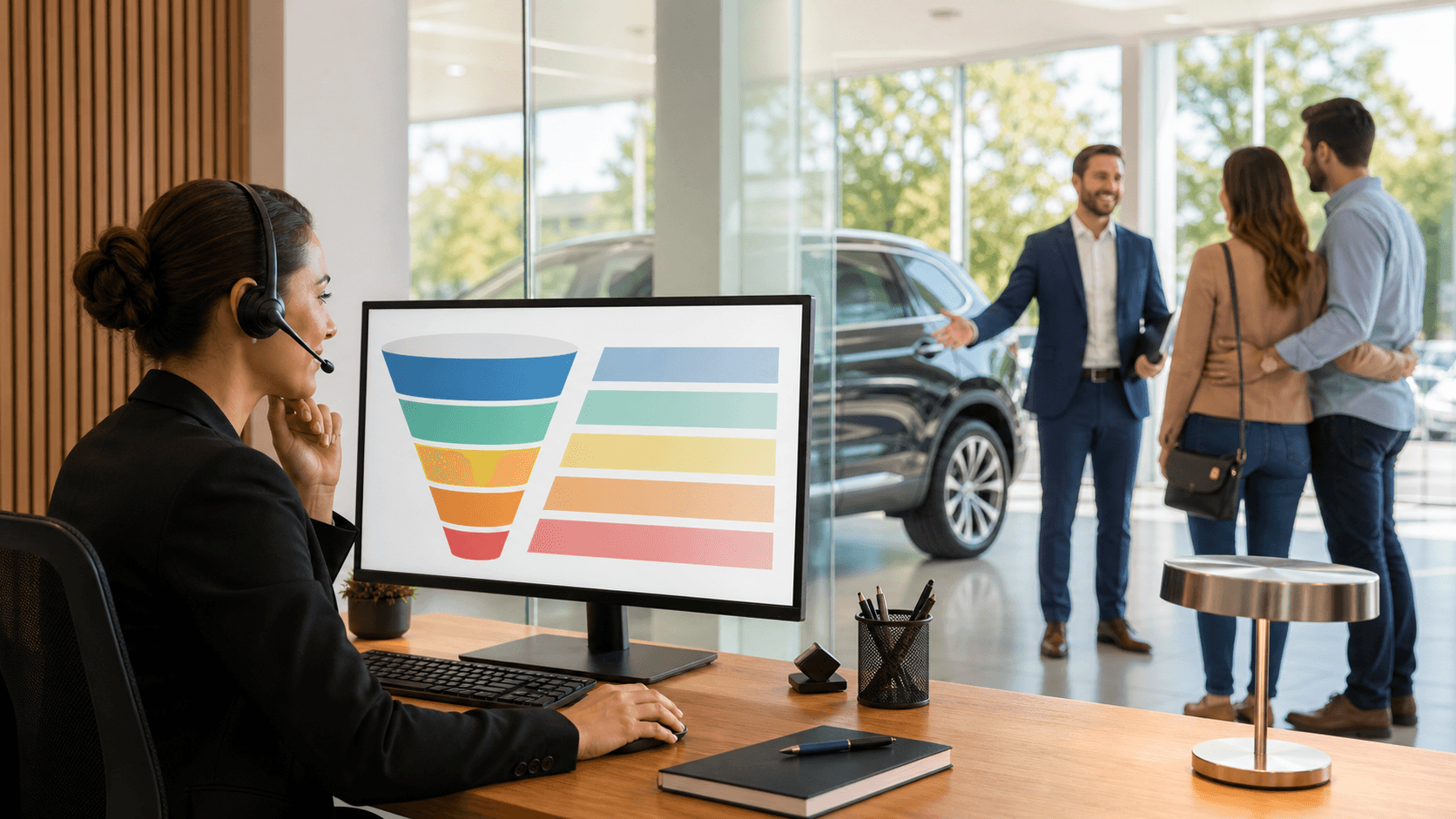
A disciplined dealership appointment conversion service treats each step like a measurable stage:
- Contact rate, did we get a live conversation or response?
- Set rate, did that contact turn into a booked appointment?
- Confirm rate, did we lock it in before the day of?
- Show rate, did they arrive on time and meet a manager?
- Sold rate, did we convert that opportunity into booked revenue?
When every step is tracked and coached, those dead zones start to shrink.
Speed to Lead and Follow-up That Actually Moves the Needle
Response time is not a nice-to-have. It is the difference between winning and losing the deal. When a shopper submits a lead or calls, they are usually talking to multiple stores. The one that responds fast, clearly, and with purpose tends to win the appointment.
High-performance speed to lead looks like this:
- Seconds and minutes, not hours and days
- Priority coverage during peak season, weekends, and evenings
- An immediate plan for what happens if the customer does not answer
After that first touch, follow-up needs to be steady and smart, not random. A strong cadence during the first 72 hours often includes:
- Phone calls mixed with text and email, not just one channel
- Simple, direct scripts that focus on value and appointment times
- Clear escalation rules when a lead shows high intent, like calling back after a quote request or replied text
This is where a specialized outsourced BDC with dedicated coverage usually outperforms small in-house teams. When inbound volume spikes on a busy Saturday, or when snow or heavy rain changes traffic in your local area, you still need every lead answered fast and followed until it shows.
Missed Calls, Inbound Chaos, and the Cost of Doing Nothing
Missed calls are one of the biggest hidden drains on dealership gross. Every time a sales or service call times out, sits on hold too long, or hits an untrained agent, there is a real chance you just lost a unit, an RO, or both.
Unstructured inbound handling often looks like:
- Calls bouncing between sales, service, and parts
- Agents giving prices without setting clear appointments
- No simple path for a busy shopper who just wants a confirmed time
A structured dealership appointment conversion service approaches call flow very differently. For example:
- Sales calls are focused on needs, inventory, and firm appointment times with a named person
- Service calls aim for booked RO times, then soft hand-offs to sales when it makes sense
- BDC calls follow tight scripts that move fast from question to appointment
Missed call recovery is another big opportunity. With:
- Rapid callbacks on every missed or abandoned number
- Voicemail, text, and email combinations to re-engage
- A tracking loop that measures how many of those saved calls turn into shows
Even recovering a small slice of those missed calls can shift your month from flat to strong.
Database Mining and Customer Reactivation That Prints Profit
Chasing fresh leads while your CRM and DMS are packed with ignored opportunities is backwards. Your database is full of people who already know your store and your brand. Many are closer to buying again than any cold shopper who just clicked an ad.
High-yield mining campaigns often target:
- Equity and payment reduction opportunities
- Lost leads who never bought and never came back
- Orphan owners with no current sales contact
- Declined service work that ties directly to safety and reliability
- Upcoming service intervals that open doors to upgrade talks
When these campaigns are run in a disciplined way by a focused team, they usually produce low-cost, high-intent appointments for both sales and service. You are not guessing who might be ready. You are talking to people who already have history with your store.
In-House BDC vs. Outsourced BDC, What Really Drives ROI
On paper, an in-house BDC sounds simple. Hire two or three people, set them up with phones and CRM, and let them book appointments. In practice, the true cost and performance gaps add up fast.
With in-house teams, leaders often juggle:
- Recruiting and constant turnover
- Training that stops once the first busy weekend hits
- Limited coverage outside core store hours
- Little time for coaching, live call reviews, or script updates
A performance-focused outsourced BDC and call center partnership is built around:
- Consistent coverage across days, nights, and weekends
- Tight scripting and ongoing role-play and coaching
- Hard accountability to KPIs like set, show, and sold per agent hour
Take a mid-sized franchise rooftop as an example. When a small in-house BDC is replaced with a structured external team, the store often sees faster speed to lead, higher appointment show rates, and stronger gross per opportunity because more of the pipeline is actually worked with discipline every day.
Turning Your BDC Into a Predictable Revenue Engine
Strengthening appointment conversion is not about magic tricks. It is about disciplined, repeatable processes that work in every season, whether you are in a hot summer selling stretch or trying to finish strong at year-end.
Key changes that move the needle include:
- Faster response times on every lead and call
- Clear, firm appointment standards shared by BDC and sales
- Relentless but respectful follow-up with clear cadences
- Data-driven coaching built on contact, set, show, and sold numbers
- Consistent database mining and customer reactivation work
When those pieces are in place, your BDC stops being a cost line and starts behaving like a steady revenue engine. That is the focus we bring at Epic BDC, supporting automotive and other dealer-based businesses that are serious about fixing appointment leaks, tightening their pipelines, and protecting their front-end and fixed ops gross every single month.
Turn More Calls Into Confirmed Showrooms Visits Today
If you are ready to convert more leads into real appointments that show, our dealership appointment conversion service is built to plug into your current process and start producing results fast. At Epic BDC, we focus on disciplined follow-up, clear scripts, and consistent reporting so you can see exactly how every opportunity is handled. We will work with your team to align expectations, targets, and communication, keeping everything transparent and easy to track. Have questions about fit, pricing, or next steps? Contact us and we will walk you through what to expect in your first 30 days.